Say goodbye to our little Zebra friends
By Nicole Holcomb, SystemID Product Manager
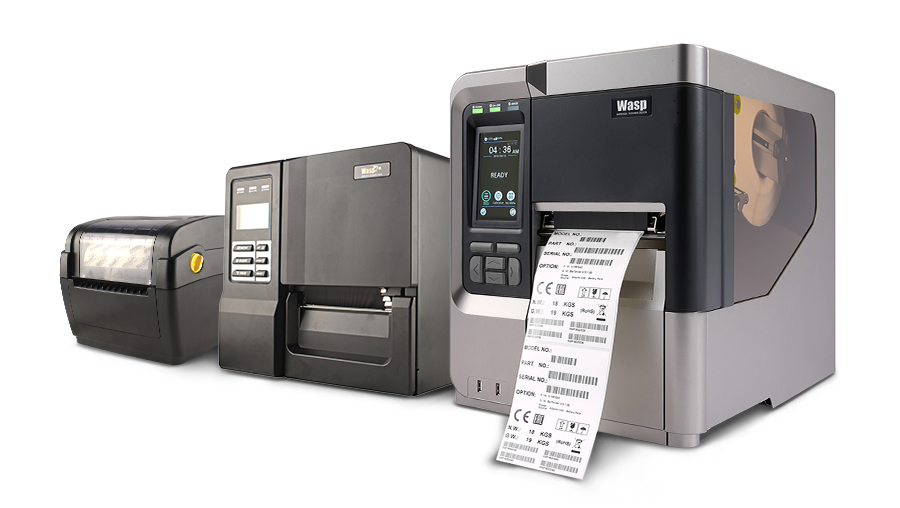
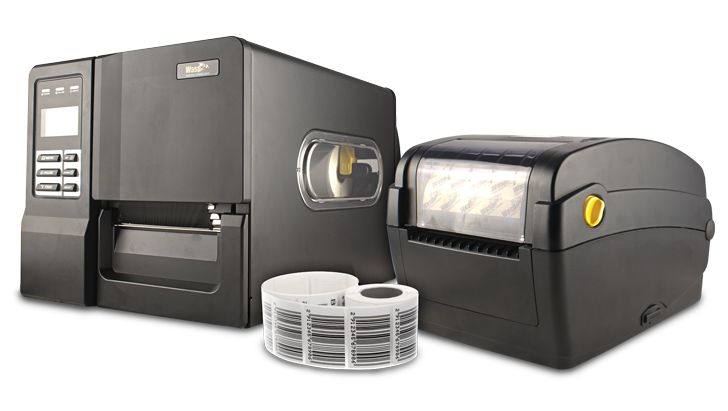
Zebra recently announced that they are discontinuing two of their best-selling desktop printers: the 4” TLP/LP 2844 and the 2” TLP/LP 2824 models. These popular printers have had a great run, but Zebra, a leader in the thermal barcoding industry, has decided it’s time for them to go.
But, do not worry! There is still time to buy new models.
You have until September 28th to order the TLP/LP2824 models and October 31 to order the TLP/LP2844s. You can also stock up on supplies, or prolong the life of your printers through our extended warranty program and certified repair services.
And if you’re ready to make a change, you’re also in luck!
The Zebra G-Series desktop printers are perfect replacements for the 2824 and 2844 printers. These space-saving workhorses include the:
- Basic GK model for the best value of all desktop thermal printers
- Premier GX model, which supports a variety of industries and applications with the widest range of features

Call for information about the GX Series
Both models deliver best-in-class speed and performance. And best of all, they are competitively priced and easy to integrate into your existing systems.
Interested in learning more?
Give us a call at 1.888.648.4452. And don’t forget about our trade-in program, which will save you money on your next purchase!
Nicole Holcomb is a Product Manager for SystemID Warehouse, the nation’s leading value-added reseller of AIDC products and solutions for small-to-medium-sized businesses. An industry expert in barcode scanning and mobile computer solutions, Nicole routinely shares helpful information that keeps companies competitive.
Suffering from writer’s cramp?
Posted by smcgown in Uncategorized on August 14, 2012
By Keith Crockett, SystemID Warehouse Solutions Manager
We all know that the more information we have, the greater the need for a system to manage it. Manual processes lead to costly mistakes and they do nothing to improve efficiency. Yet many small-to-medium-sized businesses still rely on pen and paper to capture important information.
What if there was an easier way to automate your data collection process?
There are many barcode solutions designed to optimize daily tasks, such as tracking assets, controlling inventories, and maximizing point-of-sale transactions. Our company, SystemID, sells several different systems from major manufacturers for use in most every industry. But sometimes organizations can’t find the right barcode software for their unique needs.
That’s where TracerPlus comes in.
SystemID is a trained and certified partner of TracerPlus, which offers handheld barcode systems that allow companies to create applications for their data collection needs. All you have to do is contact us to learn how to download the free TracerPlus Desktop software, and then choose the solution that works for you. TracerPlus offers a suite of products for developing applications and syncing and connecting them to your database.
And the best news of all is that TracerPlus products are easy to use, affordable, and lightening quick!
So, if you’ve been looking for a cost-effective way to automate operations so you can reduce errors, eliminate duplicate records, and save time, give us a call. Our team of barcode experts can help you select the right barcode system and equipment for your unique needs.
Immediate Inventory Management: Everyone Wins with RFID Technology at Walmart
Posted by smcgown in Inventory Management on August 6, 2012
By Jay Schofield, SystemID Director of Marketing
Last weekend I was in Walmart looking for some shorts when I heard the oddest noise coming from the other side of the rack. It sounded like a fast-paced video game…beep, beep, beep, beep (all within micro seconds of each other). “What could this be?” I thought.
As I peeked around the corner, I was amazed to see a stock clerk from Walmart walking through the clothes racks getting a real-time floor inventory with a Motorola RFID scanner.
This is how far we have come. Stores no longer spend valuable time and money restocking after hours. Now, they restock as soon as they take floor inventory off the rack. And with RFID technology, they instantly know the brands, models, and sizes that consumers are buying, which helps the whole supply chain become more efficient.
So, how does this “on-demand” inventory control benefit consumers?
As you know, Walmart remains the most competitively priced superstore in the U.S., due—in part—to the reduced overhead for night stockers and merchandisers. This means consumers not only save money when they shop there, they also enjoy incredible service.
For example, have you noticed that Walmart never seems to be out of stock on the floor? That’s because real-time RFID inventory counts alert employees to immediately replenish the racks instead of waiting to restock overnight. Purchasing is also notified on the spot so they can place orders throughout the day instead of the next morning after overnight numbers come in.
(And for those of you who think Walmart uses this technology to track toilet paper to your house, this is not a “Big Brother” conspiracy. All RFID tags are disabled at checkout.)
Walmart simply uses this technology to improve their operations and better serve shoppers like you and me. And it’s working.
I not only quickly found the shorts I was looking for in my size and color; I breezed through self-service checkout and was out of the store in less than five minutes.
Isn’t technology great?
See how you can improve your operations and keep happy customers using an affordable barcode scanning system from SystemID. Call one of our experts at 1-888-648-4452 to learn more.
SystemID is now an authorized Datalogic Service Provider
Posted by smcgown in Industry News on June 20, 2012
You read that correctly. SystemID Warehouse is now authorized by Datalogic to provide repair service on Datalogic Powerscan, Powerscan RF and QS6000 series scanners. Contact SystemID Warehouse for details.
A Visit from Honeywell
Posted by Kyle Gambrell in Industry News on June 18, 2012
Hello readers, it has been far too long. No, we did not forget about you…we would never do that. We have simply been hard at work making…get ready for this…a new product catalog! Settle down, I know you are excited, and don’t worry your copy should be coming soon; they mailed out on May 7th. So, now that you know the reason for our absence, we can really get started, and I can assure you that a hiatus of that magnitude won’t be taken again.
Yesterday, we had the pleasure of hosting Honeywell for training for our sales team. They brought in lunch from Panera (it was exquisite, and the cookie was amazing), but I am getting off topic. Honeywell went over their new product “road map” for the next six months; it was very cool. There is a lot of new and exciting stuff, from scanners to mobile computers, and even some items that are new to not only the Honeywell portfolio, but fairly new to the industry as a whole. So, be on the lookout! 2012 is going to be a big year for Honeywell.
Next, we went over some trends in the scanning industry, which we were excited about. Our industry is growing across the board, but especially scanning. Being pushed by the adoption of 2D and cordless scanners, barcode scanners are believed to be a strong area of growth in the AIDC (Automatic Identification and Data Capture) arena over the next couple of years with 2D scanners showing the strongest growth rate as 2D barcodes are becoming the “new normal.”
All things said, it was a very good training. We learned a lot, and had the privilege of seeing what is coming out in the future. We also confirmed that our industry is expecting big things from barcode scanners over the next couple of years, especially in 2D.
Well, there you have it folks – the first blog in a long while. As I said earlier, we apologize, and it won’t happen again. In fact, I would expect even more activity than usual. Let me know what you think or if you have any questions. Until next time…
The Great Blackout of 2012
Posted by Kyle Gambrell in Did You Know? on June 18, 2012
CAPTAIN’S LOG
Star Date: June 7th, 2012
I write this to you in relative comfort and safety. Things have stabilized now; our world is as it should be. I write this not only in memorandum, but also in hopes that future generations can see how we prevailed, and know that there is hope. I have seen tragedies before; the Cowboys losing in the playoffs to the Giants in 2007; the hottest summer on record in 2011 (all the chocolate melted in the vending machines); the temporary scare that smart phones would replace barcode scanners; and the QR Code/Microsoft Tag skirmish of 2009. All were trying events, but they were nothing like this. (The events I write in this log are real, and are written to the best of my memory.)
Wednesday May 30th, 2012
Time: 8:45 p.m.
I was sitting at home on my couch, watching a certain television show on the History channel about two famous feuding families, when my phone vibrated alerting me of a new email that I received. Complete shock is what I experienced next. I don’t remember the exact wording, but it was something along the lines of, “Today a delivery driver backed into the main power supply of the building. As a result power has been cut from the building as of 45 minutes ago. We are working on a solution, but don’t foresee workstations being up until noon, at best, on Thursday.” Great! What is going to happen? How will our customers get their barcoding equipment, supplies and solutions? It was important that we get back up and running as soon as possible. I would show up early and help out where I could. Sleep did not come easy that night.
Thursday, May 31st, 2012
Time: 10:22 a.m.
I arrived and saw pretty much what I expected – an empty parking lot, doors open, and no lights on. I remembered to grab my lunch, a frozen dinner, before I left home.As I walked in I went about my usual routine, or I at least tried. The lights were off, but the sun was out so it was not too dark. I went to put my lunch in the freezer…no luck there, the freezer is run by power; what was I thinking? I half laughed at myself and continued into the office. I saw a few people milling about, but for the most part the office was empty, as it should be…the email said noon. When I got to my desk the first thing I did was pick up the phone. They were working. “They just came back on,” a coworker said, “we are all up at the front.” Just as the parking lot suggested, there were only a few people. Since the phones had come back on line you could hear them ringing. We all raced to try and answer the phones that were ringing in the different cubes. Being in marketing, all I could do was explain the situation and take a message. “Sales will be in promptly at noon,” I would say, hoping it was true.
Much to my relief, it was. Most were even early . We had our full sales force in their seats and on the phone by noon. It was beautiful. We also lucked out that a cold front had come through. Instead of it being 95 degrees outside it was a mild 80, so things could have been much worse. The only issue now remaining was the lack of powered work stations. At 2:00 p.m., this problem was also remedied…kind of. Three generators were brought in, allowing for about 10 out of 50 work stations to be powered on; at least we could get orders out. I prayed for a better tomorrow.
Friday June 1st, 2012
Time: 8:00 a.m.
My prayers were not answered. As I pulled up, the building was still dark, which meant a couple of things. One: obviously, the power was still off. Two: if the power was off, that meant, the air was still off. As I wrote earlier, yesterday we were lucky, as it had been unseasonably cool, but today there would be no such luck. The forecast called for a temperature in the high 80’s! We must press on, I remember thinking, and press on we did. For the most part it was business as usual, except with a skeleton crew working in shifts as there were still only 10 work stations with power. BBQ was brought in for lunch, and we actually had a pretty decent sales day, all things considered. It was hot, it was uncomfortable, but we were glad to do it, for you, our customers. Many companies would have shut down and waited for the ship to be righted, but not us! We are not like most companies. We looked this mess in the face and said “bring it on.” I found out Monday morning that the power was not restored until 5:45 p.m., Sunday evening.
As I write this remembering the events of those days, it actually was not that bad. It was not ideal, but we made do. We were able to fill our customers’ needs, and we did it with a sweaty smile. Work almost seems too easy now; we are spoiled with air conditioning and light. Maybe, we should go without and challenge ourselves. Cut the power for a full week; it would only make us stronger. Wait…I just checked the weather. Never mind, forecast for next week calls for temperatures in the mid-90s. Maybe we should wait until October? Ah well, until next time Captain’s Log…I will write again soon.
LIFO vs. FIFO
Posted by Kyle Gambrell in General on March 13, 2012
Hello again readers! Today I am going to tell you the tale of LIFO and FIFO. Now, before you get too excited we are talking about inventory methods, not Hobbits or Elves. Do I still have any readers left? Good, we shall continue then.
LIFO stands for Last In, First Out and FIFO stands for First In, First Out, simple enough right? Before we dive further into LIFO and FIFO, we must first understand what exactly inventory is. Inventory is, in it simplest form, assets that are meant to be for sale. Below is a formula that is commonly used to determine inventory.
Start of Inventory + Purchases – Cost of Goods Sold (COGS) = Ending Inventory
Meaning add the inventory you start with to new inventory you purchase, subtract the inventory you sold, and your current inventory is what remains. Still following?
So now that we have inventory figured out we can get into how we value inventory, and the inventory-costing methods used by most companies. These methods directly affect the balance sheet, and they are…you guessed it, LIFO and FIFO.
FIFO (First In, First Out)
This inventory method is where the first unit coming into inventory is the first unit sold. Let’s try this with an example. A company called Fun Factory produces widgets, in fact they make the best widgets in the world, not really part of the example but I just wanted to make sure you know. In January it cost the Fun Factory $200 to make 10 widgets, but in February, because of a rise in cost of thingamajigs, which everyone knows are vital to make widgets, it costs Fun Factory $250 to make 10 widgets. The FIFO method would show that if Fun Factory sold 10 widgets in March, the Cost of Goods Sold (COGS) is $200 per widget because that was the cost at the time when the first widgets went into inventory.
LIFO (Last In, First Out)
Now for this inventory method the last unit coming into inventory is the fist unit sold. So for the 10 widgets sold in March, Fun Factory would assign $250 per widget to the COGS, while the remaining $200 widgets are used to calculate the value of inventory.
So now we know the difference, but what is the best one to use? That depends on what kind of goods you have. FIFO is simpler to report on taxes and makes the company look better to investors as it increases the amount of income. FIFO inventory is considered to be a more accurate inventory report. LIFO is used by companies that want to reduce taxable income or companies that sell products where the cost of the items are increasing, such as oil companies. LIFO inventory has become more popular since the 1970’s as it reduces income tax in times of inflation; LIFO is only used in theUS and Japan.
RFID gets a Texas sized makeover
Finally a toll tag that I can be proud to hang in my window. NTTA has brought you the Dallas Cowboy Toll Tag!
Written by John Boyer, SystemID Account Manager
For under $25 you can own one. Available thru the official fan stores for a limited time. You will need to call the NTTA and register the new tag of course and then you can wrap the old golden yellow tag in foil and send it back to the NTTA address that is included in the package. The tag was easy to put on with the included instructions. I even got one for my Mom’s birthday.
At .15 a mile, using the tag is half the cost of Zip Cash and without the hassle. Making them well worth the small investment if you work alongside a tollway in the North Texas area.
Note of caution: According to my research the tag itself once applied cannot be removed without damaging the chip inside. So you may want to consider installing with clear tape if you plan on buying a vehicle in the near future.
Toll roads that accept the new tag are:
North Dallas Area
- George Bush North Turn pike
- Dallas North Tollway
- Sam Rayburn Tollway
- Addison Airport Tunnel
Houston Area
- Mountain Creek Lake Bridge
- Katy Managed Lanes
- Sam Houston Tollway
- West park Tollway
- Hardy Toll Road
Locations to purchase in person
For more information about the NTTA visit: http://www.ntta.org/